

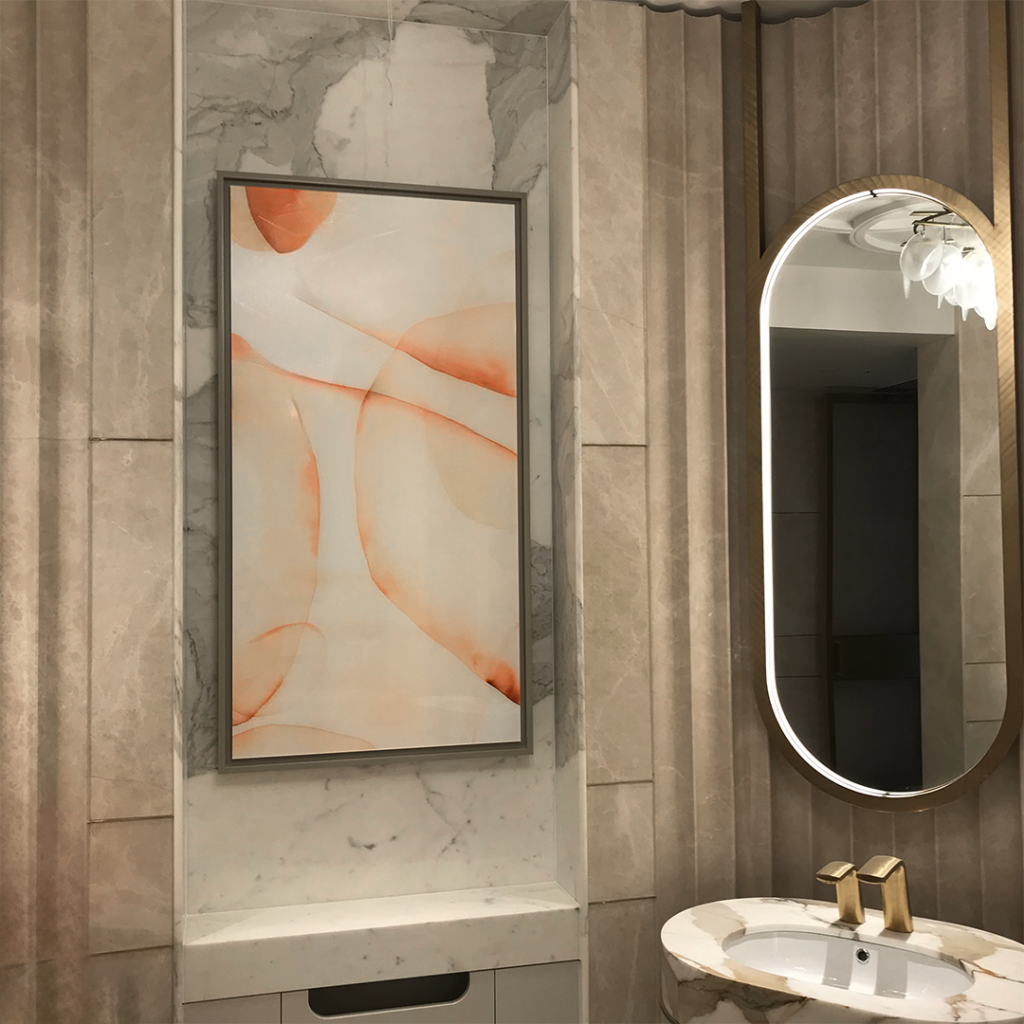
Mirrors can transform any room, making spaces feel larger & brighter whilst adding that touch of elegance we all crave. But here’s the thing — hanging them properly is trickier than most people realise. I’ve seen countless beautiful mirrors completely ruined by poor placement, dodgy fixings, or simply being hung at the wrong height. After years of dealing with mirrors (and making plenty of mistakes myself), I’ve learnt that getting it right from the start saves you time, money & a fair bit of frustration.
The problem is that mirrors are deceptively challenging. They’re heavier than paintings, more reflective (obviously!), and unforgiving when it comes to placement. Get it wrong, and you’ll either be staring at the ceiling or admiring your shoes every time you pass by. Worse still, a poorly secured mirror can come crashing down, creating a safety hazard & seven years of bad luck — though I’m not sure about the superstition bit.
Getting the Height All Wrong
This is probably the most common mistake I see, & it drives me absolutely mad. People either hang mirrors so high you need a stepladder to see yourself, or so low that only the family dog gets a proper view. The golden rule? The centre of your mirror should sit at roughly 57-60 inches (145-152cm) from the floor. That’s eye level for most adults.
But here’s where it gets interesting — that rule isn’t set in stone. If you’re particularly tall or have a household of hobbits, adjust accordingly. I once hung a mirror perfectly to standard height, only to discover the homeowner was 6’4″ & spent his time looking at his chest rather than his face. Not ideal when you’re trying to shave!
Consider the furniture beneath your mirror too. Above a console table or mantelpiece, you want roughly 4-6 inches (10-15cm) of space between the furniture top & the mirror’s bottom edge. Any more and the mirror looks like it’s floating; any less and everything feels cramped. It’s all about proportion, really.
Ignoring Wall Construction & Fixings
Right, this is where things get serious. I can’t tell you how many times I’ve been called out because someone’s lovely mirror has taken a tumble in the middle of the night. Nothing quite wakes you up like the sound of shattering glass & the realisation that you’ve probably just created a small disaster zone in your hallway.
The culprit? Inadequate fixings. That little picture hook you picked up at the pound shop might handle a lightweight print, but mirrors are substantial beasts. A medium-sized bathroom mirror can easily weigh 10-15 pounds (4.5-7kg), whilst larger decorative pieces can tip the scales at 30 pounds (14kg) or more.
You absolutely must use appropriate wall plugs & screws for your wall type. Plasterboard walls need proper cavity fixings — those expanding toggles or spring toggles work brilliantly. Solid walls call for the right rawl plugs & screws. And please, for the love of all that’s holy, use a stud finder if you’re hanging anything substantial. Finding those wooden studs behind the plasterboard gives you the strongest possible fixing point.
One more thing — always use two fixing points, never just one central hook. Mirrors need stability, & a single point of contact is asking for trouble.
Measuring Mistakes That Create Chaos
Measuring seems straightforward until you’re standing there with a wonky mirror that’s somehow ended up three inches to the left of where you intended. The trick is to measure twice (or three times if you’re like me), mark clearly, & use a spirit level religiously.
Here’s my foolproof method: measure your mirror’s width & divide by two to find the centre point. Measure the distance between the hanging points on the back of the mirror. Mark your wall accordingly, double-check with your spirit level, then mark again. I know it sounds excessive, but trust me — it’s easier than patching up extra holes in your wall later.
Also, consider the room’s proportions. A tiny mirror on a huge wall looks lost, whilst an oversized mirror in a small space can feel overwhelming. As a rough guide, your mirror should be about two-thirds the width of the furniture below it, or roughly 60-75% of the wall space if it’s standalone.
Don’t forget to account for the mirror’s frame either. That ornate baroque frame might add another 4 inches (10cm) all around, significantly changing your placement calculations.
Bathroom Blunders & Moisture Mayhem
Bathrooms present their own unique challenges, & I’ve seen some right disasters over the years. The combination of moisture, steam & inadequate ventilation can turn mirror hanging into a proper nightmare if you don’t plan accordingly.
First off, positioning matters enormously. Hang your bathroom mirror directly opposite the shower, & you’ll spend half your life wiping off condensation. Similarly, placing it too close to the bath creates the same problem. You want good visibility without constant fogging issues.
The fixings in bathrooms need to be rust-resistant too. Stainless steel or coated screws & brackets are essential — I’ve seen mirrors fall because their chrome-plated fixings corroded after just a few months. It’s a false economy to skimp on proper hardware.
Ventilation is crucial as well. Even the best-hung mirror will suffer if your bathroom turns into a Turkish bath every morning. Consider adding an extractor fan if you don’t have one, or improving the one you’ve got. Your mirror (& your walls) will thank you for it.
Lighting Considerations Gone Astray
This is something people rarely think about until it’s too late, but lighting & mirrors go hand in hand. Position your mirror incorrectly relative to your light sources, & you’ll create shadows, glare, or unflattering illumination that makes everyone look like they’re auditioning for a horror film.
Natural light can be wonderful, but it changes throughout the day. That perfect morning reflection might become a blinding glare by afternoon if your mirror catches direct sunlight. I learnt this the hard way in my own home — what seemed like brilliant placement at 9am became completely unusable by 2pm.
Artificial lighting needs thought too. Wall lights either side of your mirror work brilliantly for even illumination, but they need to be positioned correctly. Too high & you get shadows under your eyes; too low & everything looks unflattering. The centre of your light fixtures should align roughly with your eye level — similar to the mirror height rule.
Avoid placing lights directly above mirrors if possible. This creates harsh shadows & makes detailed tasks like applying makeup or shaving much more difficult than they need to be.
Frame & Style Mismatches
I’ll admit, this isn’t strictly a hanging mistake, but it’s something I see constantly & it can completely ruin an otherwise perfectly executed installation. Choosing the wrong style or size mirror for your space is like wearing a dinner jacket with shorts — technically possible, but probably not the look you’re going for.
Heavy, ornate frames need substantial walls & appropriate surroundings. That gorgeous gilt-framed antique mirror might look stunning in a period property but could feel completely out of place in a modern minimalist flat. Similarly, an ultra-modern frameless mirror might look lost in a traditional cottage setting.
Scale matters too. I’ve seen people choose mirrors that are either comically small or overwhelmingly large for their intended space. The mirror should complement the room, not dominate it or disappear entirely.
Consider the room’s colour scheme as well. A dark frame can provide striking contrast against light walls, but might disappear entirely against dark wallpaper. It sounds obvious, but you’d be surprised how often this gets overlooked until the mirror’s already hung & looking completely wrong.
Safety Shortcuts That Spell Disaster
Safety should never be an afterthought, but I’m constantly amazed at the risks people take when hanging mirrors. We’re dealing with heavy objects made of glass — there’s genuine potential for injury if things go wrong.
Never attempt to hang a large or heavy mirror alone. You need someone to help support the weight whilst you position & secure it. I’ve seen people try to manage substantial mirrors single-handedly, & it rarely ends well. At best, you’ll struggle to get accurate placement; at worst, you’ll drop the mirror & create a dangerous mess.
Always wear safety glasses when drilling, especially into masonry walls. Those tiny fragments of brick or concrete can cause serious eye injuries. Similarly, have a dustsheet or tarpaulin ready to catch debris — it makes cleanup much easier & protects your flooring.
Check your fixings regularly too, particularly in the first few weeks after installation. Screws can work loose, & wall plugs can shift slightly as they settle. A quick monthly check takes seconds but could prevent accidents.
If you’re using adhesive strips or pads as part of your hanging system, make sure they’re rated for the weight you’re supporting. These products have improved enormously in recent years, but they’re not miracle solutions — there are still limits to what they can safely support.
Professional vs DIY Decision Making
Here’s something I think about quite a bit — when should you call in professional help rather than tackling mirror hanging yourself? It’s not always a straightforward decision, & I’ve got my own biases obviously, but there are some clear situations where professional installation makes sense.
Large mirrors (anything over 4 feet/120cm in any dimension) really benefit from professional handling. The logistics of measuring, positioning & securing substantial mirrors safely often require specialist equipment & experience. Similarly, mirrors in awkward locations — high up, in stairwells, or above baths — can pose challenges that are best left to professionals.
If you’re dealing with valuable or irreplaceable mirrors, the insurance aspect becomes important. Professional installers carry liability insurance that covers accidental damage, something your household policy might not accomodate. When you’re dealing with an antique mirror worth hundreds or thousands of pounds, that peace of mind can be invaluable.
Complex wall types present another consideration. If you’re unsure about your wall construction, have unusual surfaces (like Artex or textured wallpapers), or need to work around electrical fittings, professional advice can save considerable headaches.
That said, smaller mirrors in straightforward locations are perfectly manageable as DIY projects, provided you take proper care with the preparation & use appropriate fixings.
The Bottom Line
Hanging mirrors properly isn’t rocket science, but it does require attention to detail, the right equipment, & a healthy respect for the potential pitfalls. The mistakes I’ve covered here are all completely avoidable with proper planning & preparation.
Take time to measure accurately, invest in quality fixings, & don’t rush the job. Your mirror will look better, last longer, & stay safely on the wall where it belongs. And if you’re ever in doubt about tackling a particular installation, there’s no shame in seeking professional help — sometimes it’s the smartest decision you can make.